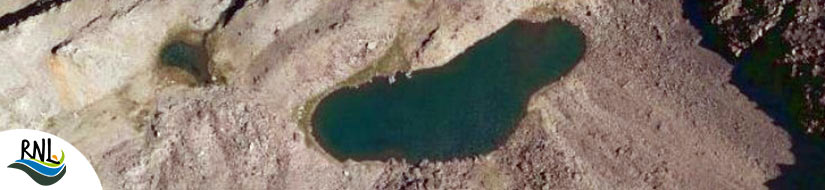
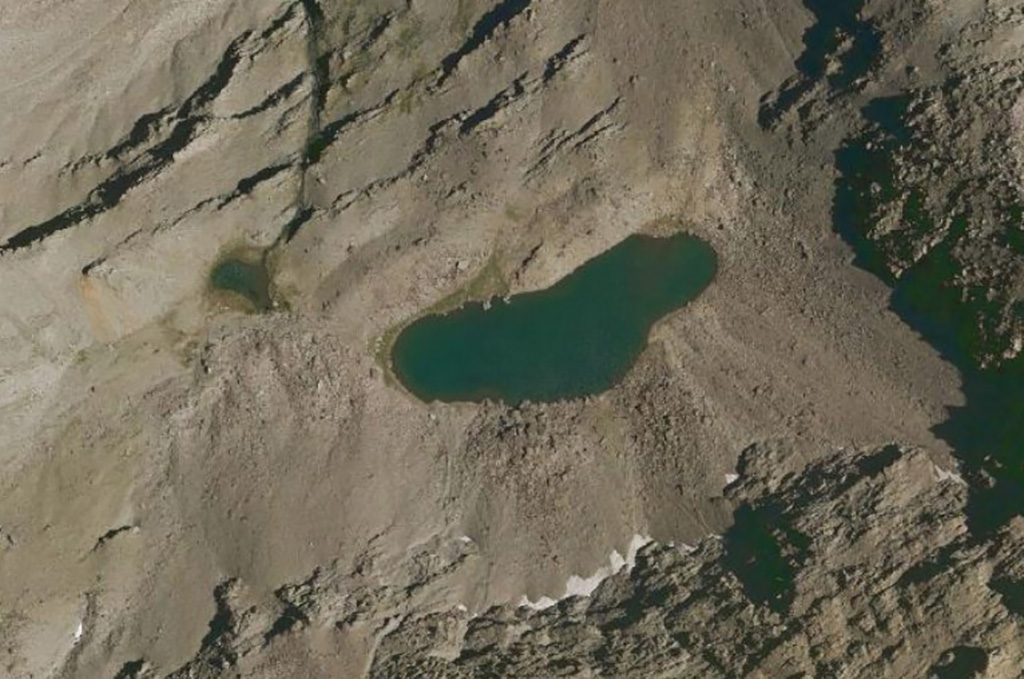
Amplia red de humedales formada por un total de 21 lagunas de origen glaciar en el entorno alpino de Sierra Nevada. Son muy diversas en cuanto a tamaño y cuenca, y se resalta su valor ecológico por ser ambientes muy singulares localizados en una zona de alta biodiversidad y muy rica en endemismos.
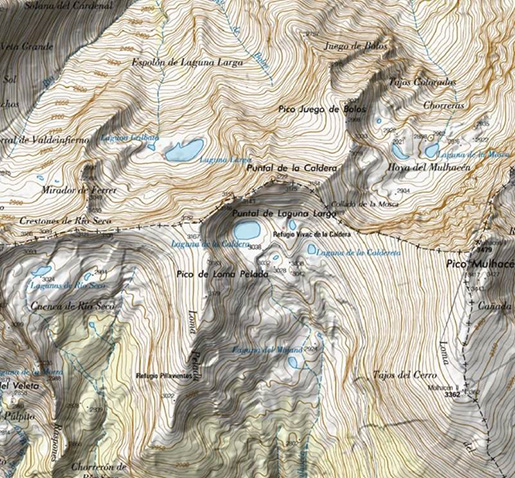
La caracterización biológica se hace en base a los datos disponibles de la laguna de La Caldera, ubicada fuera del ámbito de la RNL propuesta, pero representativa del complejo lagunar “Lagunas de Sierra Nevada”. La Laguna de la Caldera se caracteriza por lo remoto de su localización, unido al pequeño tamaño de su cuenca, su dependencia del manto níveo para definir la profundidad de su columna a lo largo del año y la alta exposición de su lámina, situada a más de 3000 m. s. n. m. Su comunidad fitoplanctónica está marcada por la escasez de nutrientes en el agua, siendo una laguna con unos niveles de producción primaria extremadamente bajos en condiciones normales. Los microcrustáceos bentónicos muestran una baja riqueza con sólo 7 especies, 4 branquiópodos y 3 copépodos. En cuanto a los macroinvertebrados, destacan los cuatro taxones de coleópteros adultos de la familia Dytiscidae. La baja riqueza y diversidad de invertebrados bentónicos encontrada es característica de este tipo de lagunas con unas condiciones extremas de temperatura, radiación y baja mineralización.
Las lagunas de Sierra Nevada son un conjunto de lagunas de alta montaña meridional, con nulas presiones y un buen estado ecológico. Están situadas en el entorno de los de 3000 metros de altura y tienen características propias que las hacen únicas en la península.
This page provides information on cookies we use: We use our own and third-party cookies to keep your session active, personalise your experience, and collect anonymous statistics about how you use this website. You can choose to accept all cookies or select which types you'd like to allow. To learn more about the cookies we use, read our Cookies Policy.
We use two types of cookies on this site. First, there are Functional Cookies, which are essential for the website to work properly. They store session data to make your experience smoother and more convenient. On the other hand, Analytical Cookies collect information about how you use the portal, without personal data, helping us provide a better and more tailored service.
Cookies are small files that are stored on your device when you visit a webpage. They are essential tools that help provide many of the services available on the information society. Among other things, cookies allow a webpage to store and retrieve information about a user's browsing habits or their device. Based on this information, they can be used to recognise the user and enhance the service provided.
Depending on the entity that manages the domain from which the cookies are sent and processes the data, there are two types of cookies: first-party cookies and third-party cookies.
There is also a second classification based on how long the cookies remain stored in the user's browser: session cookies and persistent cookies.
Finally, cookies can also be classified into five types based on the purpose for which the data is processed: technical cookies, personalisation cookies, analytics cookies, advertising cookies, and behavioural advertising cookies.
For more information on this, you can refer to the Guide on the use of cookies from the Spanish Data Protection Agency.
The web portal of the Ministry for Ecological Transition and the Demographic Challenge uses Adobe Analytics, an analytics tool that helps website and application owners understand how visitors interact with their content. Adobe Analytics uses a small number of cookies to collect data and generate usage statistics for websites. This information is sent anonymously and is not shared with third parties under any circumstances. You can choose to accept or reject these cookies, as they do not affect the portal’s functionality. However, they help provide valuable information that allows us to offer a better and more tailored service. For more information about Adobe Analytics cookies and privacy, please refer to the following links:
Additionally, pages featuring content from social network X will only set cookies if the user is logged into the X site. For more details on these cookies, please refer to the following link: Privacy on Social Network X
Finally, a technical cookie named MITECO-compliance is stored, which is a first-party, technical, and session-based cookie. It manages user consent for the use of cookies on the website, remembering which users have accepted them and which have not, ensuring that those who have accepted are not shown cookie consent messages at the top of the page. This cookie is essential for the proper functioning of the portal.
The Ministry for Ecological Transition and the Demographic Challenge gives you the option to accept or reject cookies that are not essential for the portal's operation. Upon accessing the portal, a message will be displayed in the centre of the page with information about the cookie policy and the following options:
· Firefox
· Chrome
· Safari