
Algunas sustancias poseen en su núcleo atómico una configuración inestable de protones y neutrones. Para buscar estabilidad emiten espontáneamente algunas partículas o directamente energía, denominándose sustancias radiactivas.
-
- Acceso y Conexión
- Estructura del sector
- Contratación y suministro
- Peajes de acceso a las redes de transporte y distribución y cargos asociados a los costes del sistema
- Descripción de la actividad
- Instalaciones de producción no renovable, cogeneración o residuos
- Energías renovables, cogeneración y residuos
- Tramitación de instalaciones
- ¿Qué es la calidad de servicio?
- Autoconsumo de energía eléctrica
- Preguntas frecuentes sobre acceso y conexión
- Territorios No Peninsulares (TNP)
- Enlaces de interés
- Seguridad de suministro
- Preguntas frecuentes sobre el descuento a electrointensivos tras la derogación del RDL 7/2025
-
- Anuncios
- Regulación
- Remisión de información relativa a la intensidad de las emisiones de gases de efecto invernadero de los combustibles y la energía suministrados en el transporte
- Estadísticas de biocarburantes
- Sistema Nacional de Verificación de la Sostenibilidad
- Listado de EV de la Sostenibilidad, a efectos de la Orden TEC/1420/2018, de 27 de diciembre
- Certificados de la Sostenibilidad, a efectos de la Orden TEC/1420/2018, de 27 de diciembre
- Listados de certificados de sostenibilidad
- SICBIOS
-
Instalaciones radiactivas
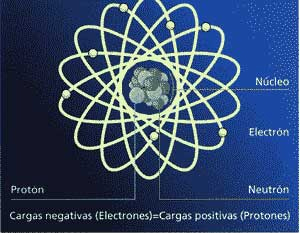
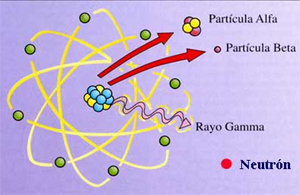
La capacidad de penetración de las radiaciones en la materia depende de los distintos tipos de radiación, desde la radiación alfa, que se puede parar con una hoja de papel, hasta el bombardeo con neutrones, que sólo se puede aislar por una gruesa capa de hormigón.
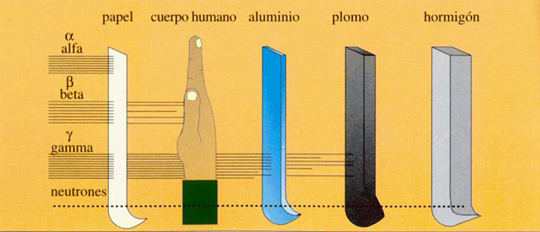
Penetración de los distintos tipos de radiación
Usos de las radiaciones ionizantes:
Las radiaciones ionizantes pueden utilizarse en nuestro beneficio:
- Empleo de rayos X y emisores gamma en radiodiagnóstico.
- Medicina Nuclear Medicina Nuclear
- Datación de restos arqueológicos.
- Investigación genética.
- Esterilización de material quirúrgico.
- Detectores de humo.
- Medidores industriales de nivel y densidad.
Todo ello en instalaciones debidamente autorizadas que se denominan instalaciones radiactivas.
Se entiende como instalaciones radiactivas:
- Las instalaciones de cualquier clase que contengan una fuente de radiación ionizante.
- Los aparatos productores de radiaciones ionizantes que funcionen a una diferencia de potencial superior a 5 kV.
- Los locales, laboratorios, fábricas e instalaciones donde se produzcan, traten, manipulen o almacenen materiales radiactivos, excepto el almacenamiento incidental durante su transporte.
Categorías
Las instalaciones radiactivas se dividen en tres categorías:
- Instalaciones radiactivas de primera categoría:
- Las fábricas de producción de uranio, torio y sus compuestos.
- Las fábricas de producción de elementos combustibles de uranio natural.
- Las instalaciones que utilicen fuentes radiactivas con fines de irradiación industrial.
- las instalaciones complejas en las que se manejen inventarios muy elevados de sustancias radiactivas o se produzcan haces de irradiación de muy elevada frecuencia de energía, de forma que el potencial impacto radiológico de la instalación sea significativo.
Estas instalaciones requerirán las siguientes autorizaciones:
Autorización previa, de construcción, de explotación, de desmantelamiento y declaración de clausura y, en su caso, autorización de modificación y de cambio de titularidad, cuya tramitación se realizará de acuerdo con lo establecido para las autorizaciones de instalaciones nucleares, con la adaptación de los documentos que corresponda.
- Instalaciones radiactivas de segunda categoría:
- Las instalaciones donde se manipulen o almacenen nucleidos radiactivos que puedan utilizarse con fines científicos, médicos, agrícolas, comerciales o industriales, cuya actividad total sea igual o mayor de 1000 veces la de exención que se establezca reglamentariamente.
- Las instalaciones que utilicen aparatos de rayos X que puedan funcionar con una tensión de pico superior a 200 kilovoltios.
- Los aceleradores de partículas y las instalaciones donde se almecenen fuentes de neutrones siempre que no proceda su clasificación como de 1ª categoría.
- Instalaciones radiactivas de tercera categoría:
- Las instalaciones donde se manipulen o almacenen nucleidos radiactivos cuya actividad total sea superior a la de exención que se establezca reglamentariamente o inferior a 1000 veces ésta.
- Las instalaciones que utilicen aparatos generadores de rayos X cuya tensión de pico sea inferior a 200 kv.
Las instalaciones de segunda y tercera categoría requerirán una autorización de funcionamiento y una notificación para la puesta en marcha, al igual que las modificaciones y los cambios de titularidad. Al final de su vida útil requieren una Declaración de Clausura.
Algunas instalaciones radiactivas pueden resultar exentas de esta condición siempre que utilicen aparatos radiactivos (es decir, que incorporen sustancias radiactivas o sean generadores de radiaciones ionizantes), cuyo tipo haya sido aprobado, para lo cual habrán de cumplir las condiciones que se establecen en el anexo II del Reglamento de Instalaciones Nucleares y Radiactivas.
Por otra parte, al objeto de disponer de una Base de Datos nacional sobre las instalaciones radiactivas, instalaciones de rayos X con fines de diagnóstico médico, etc., en la Dirección General de Planificación y Coordinación Energética existen una serie de Registros, a los cuales suministran información, periódicamente, las autoridades competentes para la autorización de las instalaciones.
This page provides information on cookies we use: We use our own and third-party cookies to keep your session active, personalise your experience, and collect anonymous statistics about how you use this website. You can choose to accept all cookies or select which types you'd like to allow. To learn more about the cookies we use, read our Cookies Policy.
We use two types of cookies on this site. First, there are Functional Cookies, which are essential for the website to work properly. They store session data to make your experience smoother and more convenient. On the other hand, Analytical Cookies collect information about how you use the portal, without personal data, helping us provide a better and more tailored service.
Introduction to the Use of Cookies on the MITECO.gob.es Website
Cookies are small files that are stored on your device when you visit a webpage. They are essential tools that help provide many of the services available on the information society. Among other things, cookies allow a webpage to store and retrieve information about a user's browsing habits or their device. Based on this information, they can be used to recognise the user and enhance the service provided.
Types of Cookies
Depending on the entity that manages the domain from which the cookies are sent and processes the data, there are two types of cookies: first-party cookies and third-party cookies.
There is also a second classification based on how long the cookies remain stored in the user's browser: session cookies and persistent cookies.
Finally, cookies can also be classified into five types based on the purpose for which the data is processed: technical cookies, personalisation cookies, analytics cookies, advertising cookies, and behavioural advertising cookies.
For more information on this, you can refer to the Guide on the use of cookies from the Spanish Data Protection Agency.
Cookies used on the website
The web portal of the Ministry for Ecological Transition and the Demographic Challenge uses Adobe Analytics, an analytics tool that helps website and application owners understand how visitors interact with their content. Adobe Analytics uses a small number of cookies to collect data and generate usage statistics for websites. This information is sent anonymously and is not shared with third parties under any circumstances. You can choose to accept or reject these cookies, as they do not affect the portal’s functionality. However, they help provide valuable information that allows us to offer a better and more tailored service. For more information about Adobe Analytics cookies and privacy, please refer to the following links:
Additionally, pages featuring content from social network X will only set cookies if the user is logged into the X site. For more details on these cookies, please refer to the following link: Privacy on Social Network X
Finally, a technical cookie named MITECO-compliance is stored, which is a first-party, technical, and session-based cookie. It manages user consent for the use of cookies on the website, remembering which users have accepted them and which have not, ensuring that those who have accepted are not shown cookie consent messages at the top of the page. This cookie is essential for the proper functioning of the portal.
Cookies Policy Acceptance / Rejection
The Ministry for Ecological Transition and the Demographic Challenge gives you the option to accept or reject cookies that are not essential for the portal's operation. Upon accessing the portal, a message will be displayed in the centre of the page with information about the cookie policy and the following options:
· Firefox
· Chrome
· Safari